
ʻIke ʻAi Art Gallery
The Resilience Office hosted the ʻIke ʻAi Art Contest to inspire and enhance the creation of the Oʻahu Food Systems Plan. This art gallery features a selection of artwork that was inspired by an ʻōlelo noʻeau related to Oʻahu’s food system. Created through a range of artistic mediums by participants of all ages, the art reflects diverse and thought provoking interpretations of Hawaiʻi’s rich and cultural food landscape. The artwork may also be featured in the Plan and on other materials. Mahalo nui to everyone who shared their passion, creativity and manaʻo!
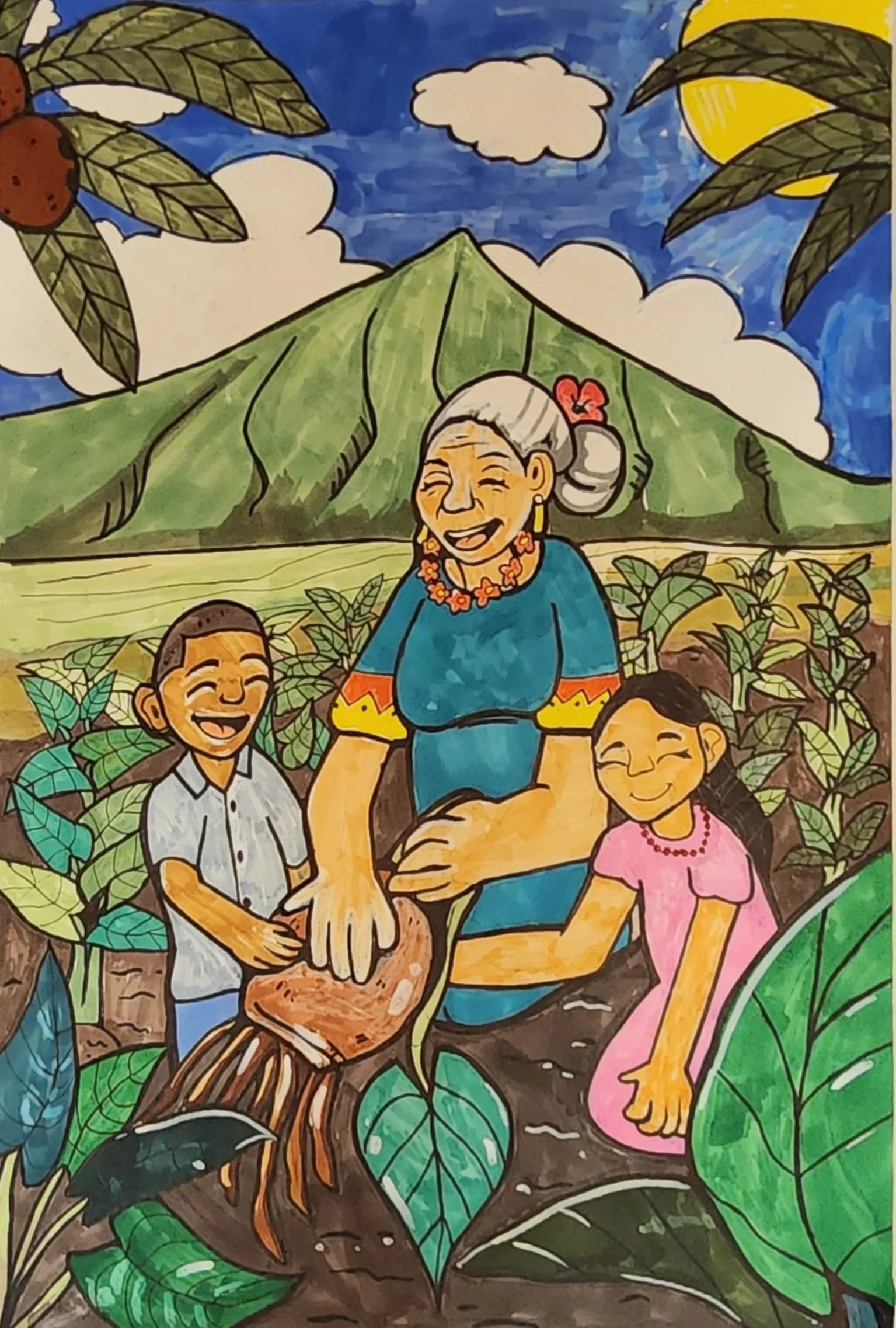
Name: Elsa Alexander
School: Nimitz Elementary School
Age: 10
Mayor's Choice Award: This award was personally selected by Mayor Rick Blangiardi and celebrates outstanding creativity and vision.
ʻŌlelo noʻeau: He aliʻi ka ʻāina; He kauā ke kanaka. English Translation: The land is chief; People are its servants.
Artist Statement: This vibrant artwork shows a Hawaiian grandmother harvesting taro with two smiling children. Surrounded by nature, their hands work together, symbolizing the passing of tradition, love, and respect for the land. Taro, a sacred plant, represents life and connection. The scene celebrates family, culture, and the deep Hawaiian value of aloha ʻāina—love for the land.
Hands of the Ancestors
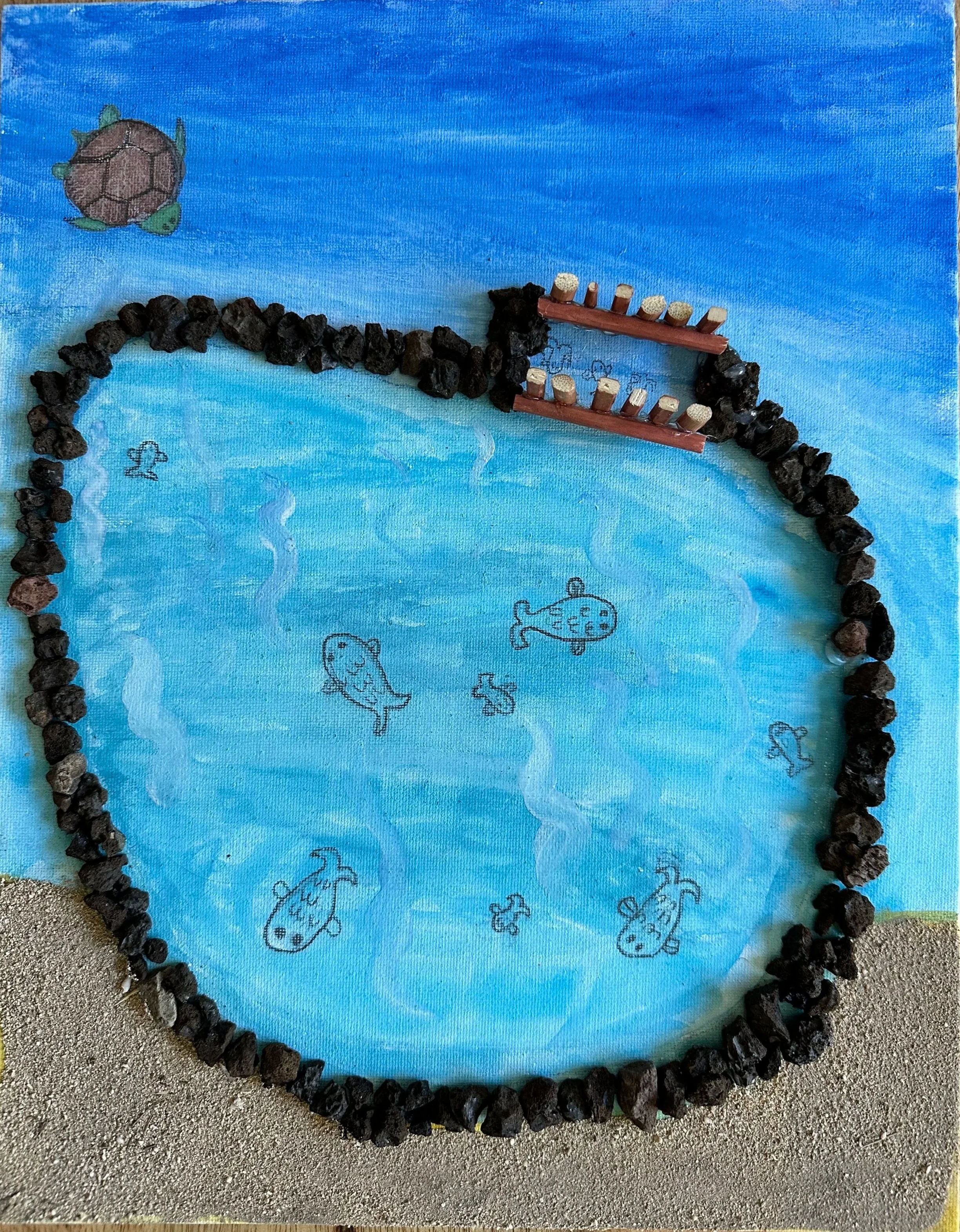
Name: Pihahauʻoli Ciotti
School: Kamehameha Schools
Age: 8
OER Food Systems Award: This award, presented by the Office of Economic Revitalization, celebrates creative expression that reflects the values of Hawai‘i’s local food systems and supports a vision of economic resilience.
ʻŌlelo noʻeau: Holo iʻa ka papa, kau ʻia e ka manu. English Translation: When the shoals are full of fish, the birds gather over them. Interpretation: Where there is food, people will gather.
Artist Statement: There is a loko ‘ia and in the fishpond there are fish. People go to the loko ‘ia to catch fish. I titled this “A School” because I’m teaching people where there are resources and how their actions affect the Uka and the Kai. Also, a group of fish is called a school.
A School
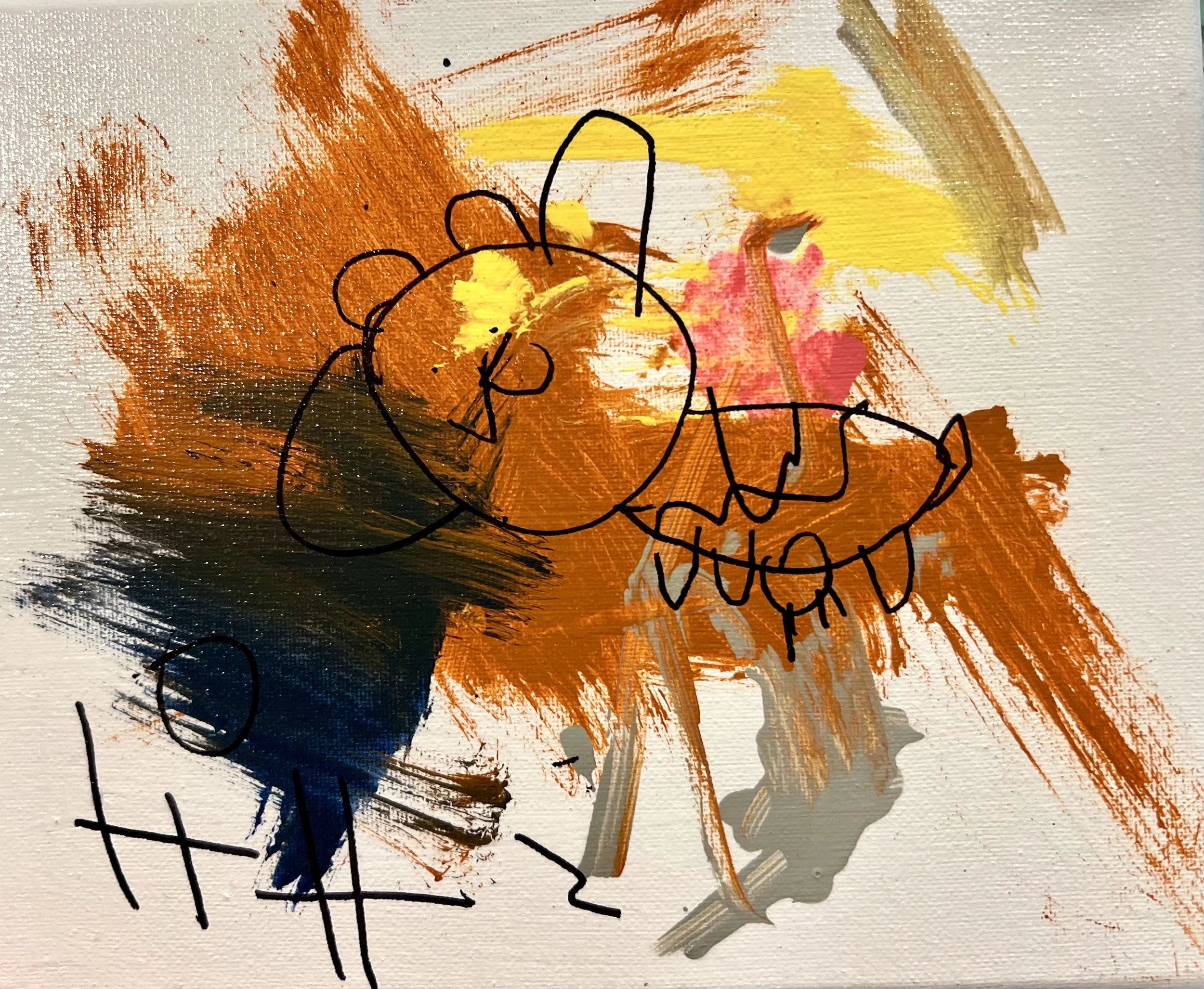
Name: Hezekiah Hvidding
Age: 8
Judge’s Choice Award: This award celebrates a submission that stood out to the judging panel for its creativity, impact, and unique interpretation of the contest theme.
School: ʻEwa Elementary School
ʻŌlelo noʻeau: Holo iʻa ka papa, kau ʻia e ka manu. English Translation: When the shoals are full of fish, the birds gather over them. Interpretation: Where there is food, people will gather.
Artist Statement: This is the first of the cow series of Hezekiah Hvidding, 8 years old. He was born with Down Syndrome and has been doing abstract art since he was 5 years old. This is the first time that he has included a cow in his abstract work. Land animals like cows are very important in the food chain. They are a good food resource as well as help with the soil, recycling and others. Hezekiah is pre-verbal but he uses art as one of his forms of communication. Even kids like him love animals. I think we should appreciate them too.
Cow Series
Name: Isabel Galdores
Age: 17
School: Waiʻanae High School
High School Voice Award: This award honors powerful storytelling or artistic expression from a high school-aged artist between 15 and 17 years old.
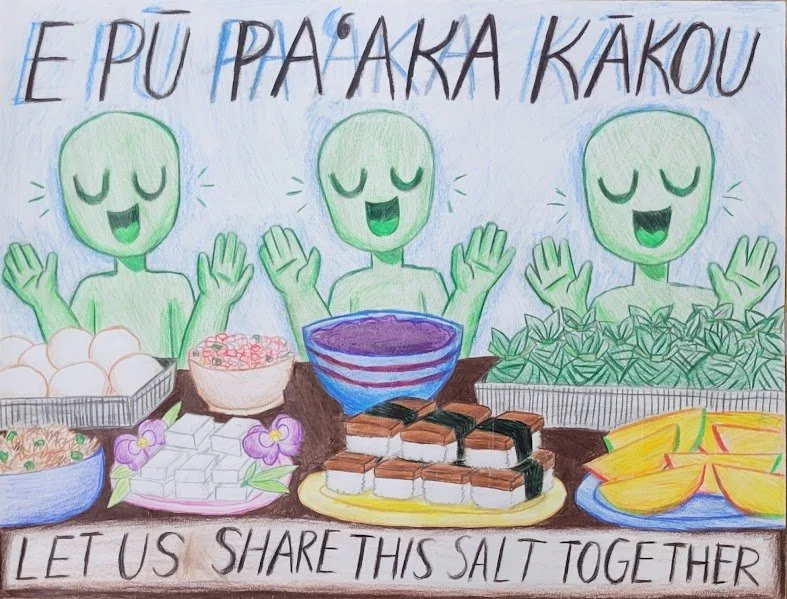
ʻŌlelo noʻeau: E pū paʻakai kākou. English Translation: Let us share this salt together. Interpretation: A gesture of gratitude before eating a meal together.
Artist Statement: This piece is inspired by the Hawaiian proverb “E pū paʻakai kākou,” which I interpret as being about how our relationship with the land is important. All of the food we consume everyday originates from the land in some way. To enjoy a good meal, we must take what the land provides. I expressed this through a representation of gratitude for the food we all share. My piece features a row of people showing gratitude for the various local foods on the table, demonstrating the meaning of the ʻōlelo noʻeau by depicting appreciation for the food we consume. Through this artwork, I want to remind people to be grateful for the land and its gifts because it is the source of the food we consume. Whether it's tending to it in order to feed the cycle of the food system or doing even the simplest things to keep our lands clean, our island needs to be taken care of as much as it cares for us.
A Feast of Gratitude

Name: Mahealani Moses
Age: 16
School: Waiʻanae High School
Excellence in Hand-Drawn Art: This award celebrates mastery and creativity in traditionally rendered artwork, including hand-drawn, painted, or manually created pieces.
ʻŌlelo noʻeau: Holo ia ka papa, kau ia e ka manu. English Translation: When the shoals are full of fish, the birds gather over them. Interpretation: Where there is food, people will gather.
Artist Statement: This artwork reflects on the idea that where there are fish, there are birds.
The Local Fish Pond
Name: Ola Madrona
Age: 17
School: Waiʻanae High School
Most Creative: This award is given to the submission that showcases a unique, imaginative, and bold approach to interpreting the contest theme.
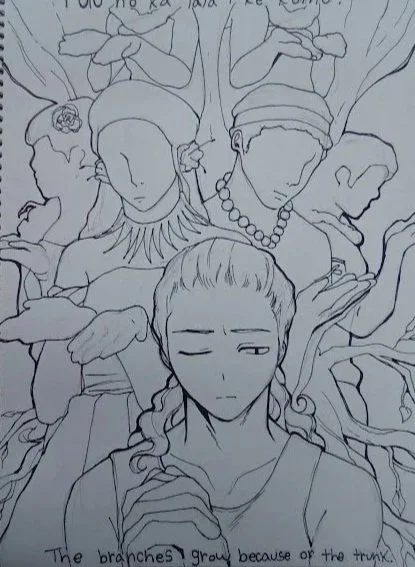
ʻŌlelo noʻeau: I ulu nō ka lālā i ke kumu. English Translation: The branches grow because of the trunk. Interpretation: Without our ancestors we would not be here.
Artist Statement: My artwork is based on the ʻōlelo noʻeau, “I ulu nō ka lālā i ke kumu.” which means, “the branches grow because of the trunk”. This proverb makes me think about my family and how far we’ve come. I am who I am because of the generations and generations of different ancestors meeting and falling in love. In my artwork, I chose to show a summarized version of our ancestry passing down to what we have today. The upside down tree in the background grows from the trunk to its branches, and the simplified style of the older generation compared to the more detailed style of the younger shows the gap between the two. As well as the open hands of the past compared to the closed one today shows that most of us have yet to continue our legacy’s. Through this artwork, I want to remind people that whether you want to be here or not, there’s a whole legacy behind you. That is why you are here now.
Family Tree
Name: Hyejeong Jang (Joy)
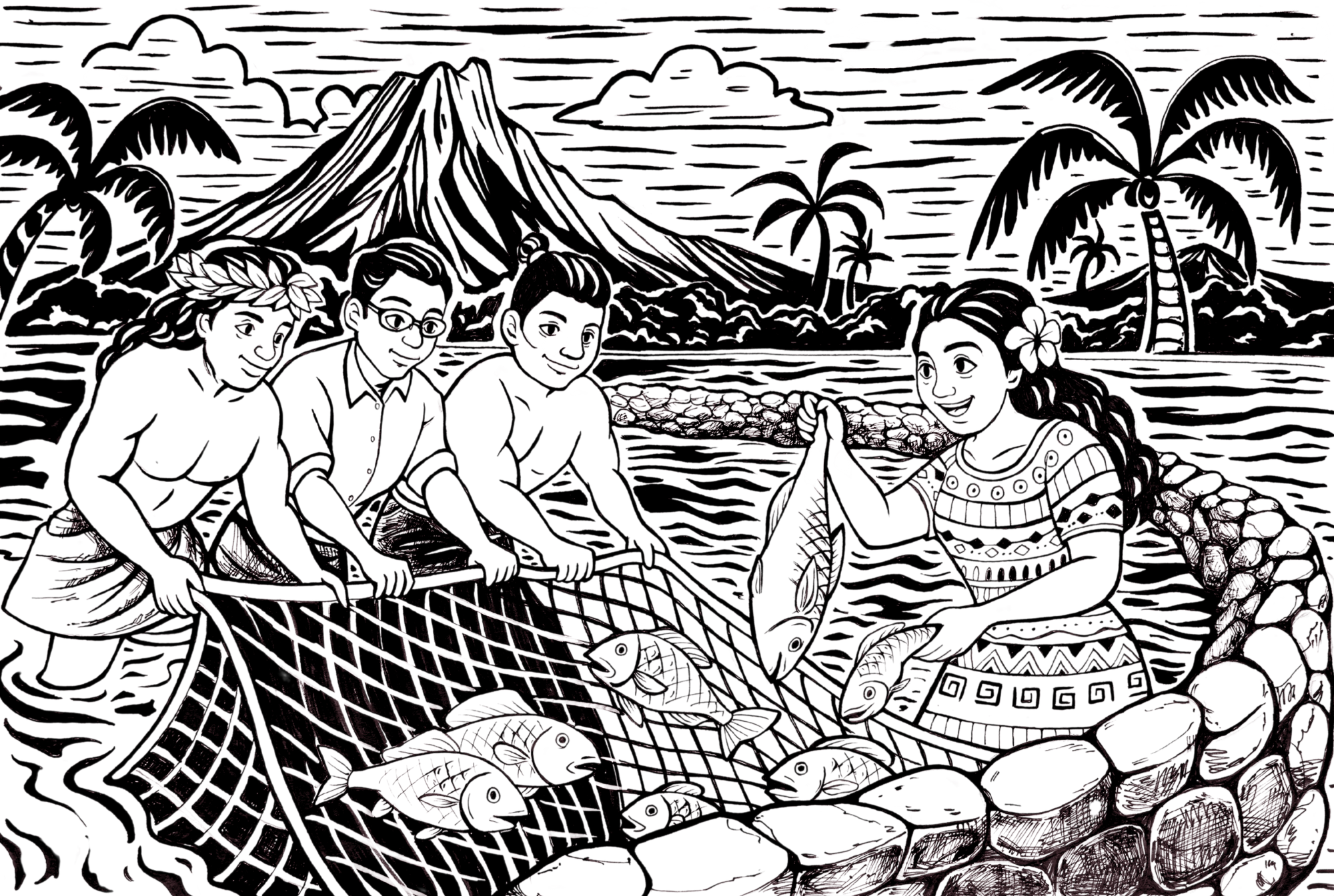
Title: Casting Together: Old Ways, New Hands
Age: 38
Best in Show – Adult Division: This award celebrates exceptional artistic excellence and impactful storytelling from an adult artist age 18 or older.
ʻŌlelo noʻeau: Holo iʻa ka papa, kau ʻia e ka manu. English Translation: When the shoals are full of fish, the birds gather over them. Interpretation: Where there is food, people will gather.
Artist Statement: Set against the backdrop of Hawaii's majestic mountains and lush palms, this linocut-style artwork illustrates the traditional practice of loko iʻa (Hawaiian fishpond fishing). Hawaiian ancestors and modern individuals come together, casting nets and sharing the joy of harvesting fish. The stone wall of the fishpond frames the scene, symbolizing a bridge between past and present. Through bold lines and vibrant expressions, the piece celebrates unity, cultural continuity, and the spirit of working together.
Casting Together : Old Ways, New Hands
Name: Kaitlyn Anderson
Age: 22
Excellence in Digital or Mixed Media Art: This award recognizes outstanding work in digital formats, photography, collage, or multimedia compositions that blend multiple techniques or platforms.
ʻŌlelo noʻeau: Holo iʻa ka papa, kau ʻia e ka manu. English Translation: When the shoals are full of fish, the birds gather over them. Interpretation: Where there is food, people will gather.
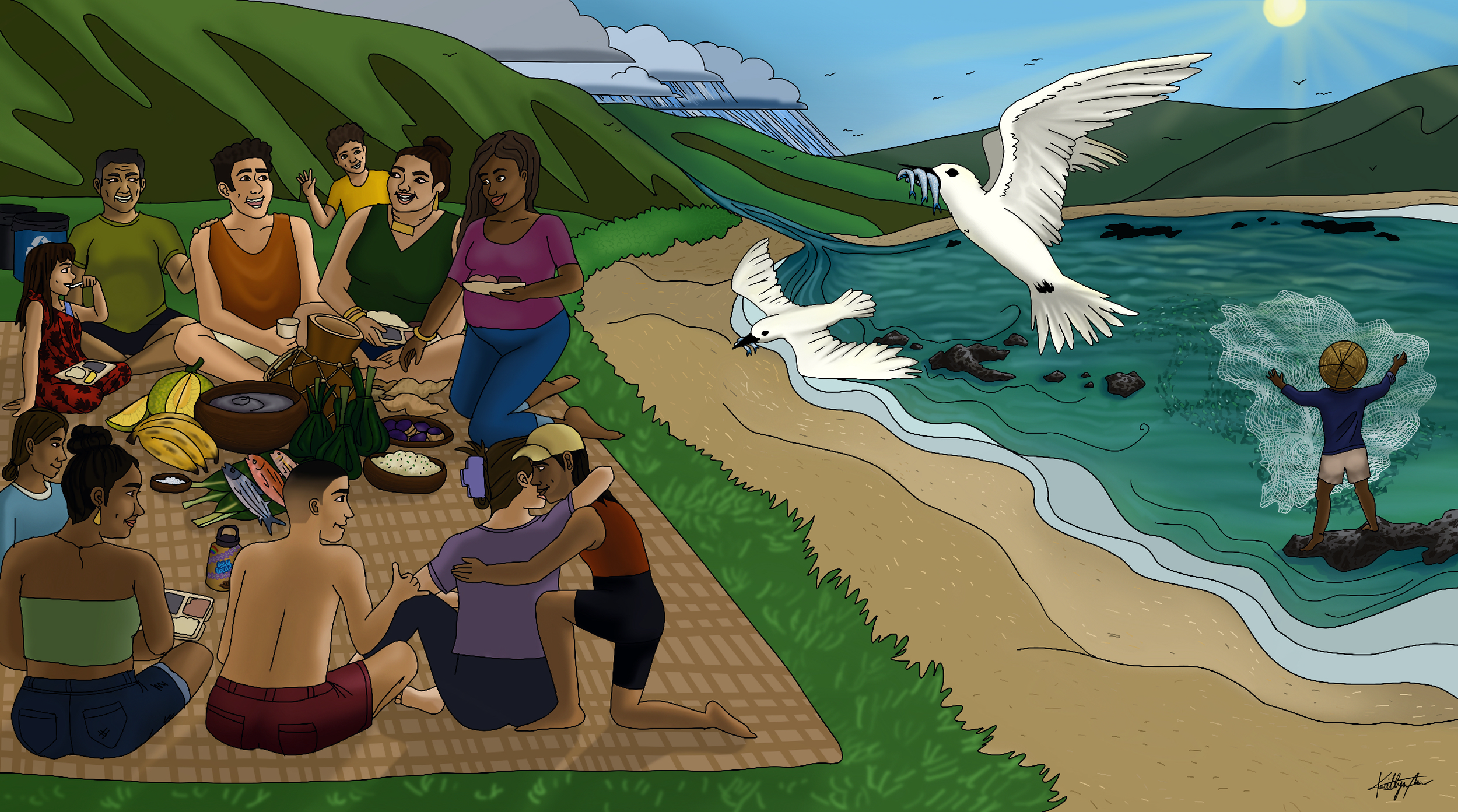
Artist Statement: As birds gather and fish over a shoreline full of fish, an ʻohana gathers together over a pāʻina full of traditional, sustainable, and local food. This highlights the community aspect of the food systems, representing the most common stakeholders: our families. The food is fresh and healthy, showing the values of Pono and Ea. The net fisher taking only what they need represents Mālama ʻĀina. The end result of the food system is represented in the trash and recycling cans, a kuleana of responsible waste practices.
Wai takes an important role, as an integral part of environmental health, sustainability, and human health; without it, our food systems break down. In the piece, the water cycle is prominently displayed, and an ipu is a big part of the feast. This theme helps to illuminate the interconnectedness of our relationships to water and food. Water is life, Ola i ka wai.
Pāʻina on the Shore
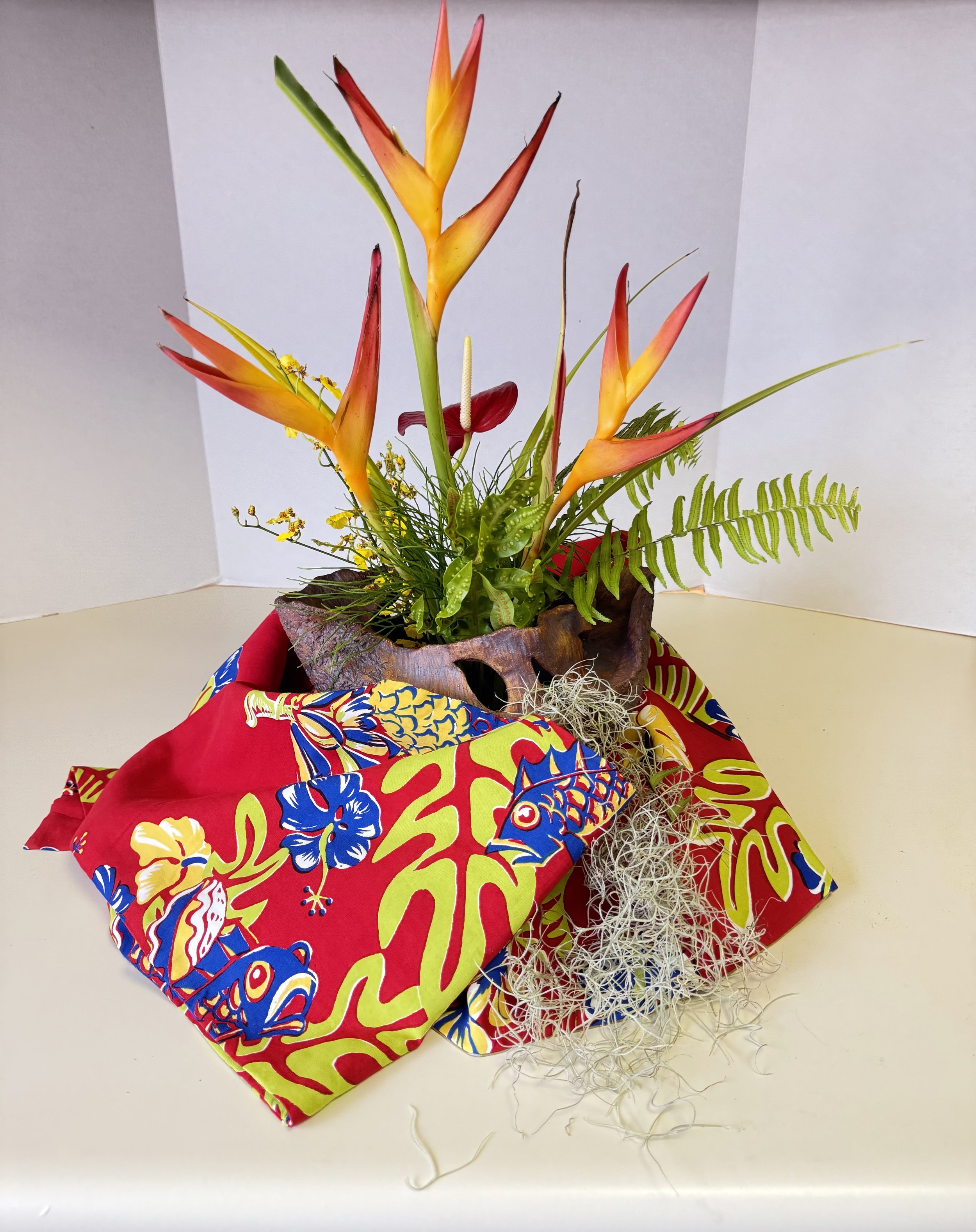
Name: Brennan Yamaguchi
Age: 16
School: Maryknoll
DPR Recreational Community Gardening Program Award: This award recognizes an outstanding submission that captures the spirit of community gardening and celebrates the importance of growing food, fostering connection, and nurturing shared spaces—core values of the City’s Department of Parks and Recreation.
ʻŌlelo noʻeau: Holo iʻa ka papa, kau ʻia e ka manu. English Translation: When the shoals are full of fish, the birds gather over them. Interpretation: Where there is food, people will gather.
Artist Statement: The Ikebana cultural piece I have created and photographed with flowers resembles Holo iʻa ka papa, kau ʻia e ka manu: where the shoals are full of fish, the birds will gather. The Bird of Paradise symbolizes birds hunting over a pond of fish, using fabric with blue fish. The added plants around parallels the environment and the importance of plants within the food system. The birds gather around a pond of fish much like people seeking food, working towards sustainability, and maintaining our food systems.
My family lives through food. Through family, friends and community, food brings us together as one ohana. Like the birds and fish, we gather together to bond - preparing and gathering around the food of the island and its great flavor. It is essential to our lifestyle and survival and is important to me spiritually, bringing me closer to the ones I love.
Pololi ‘oe
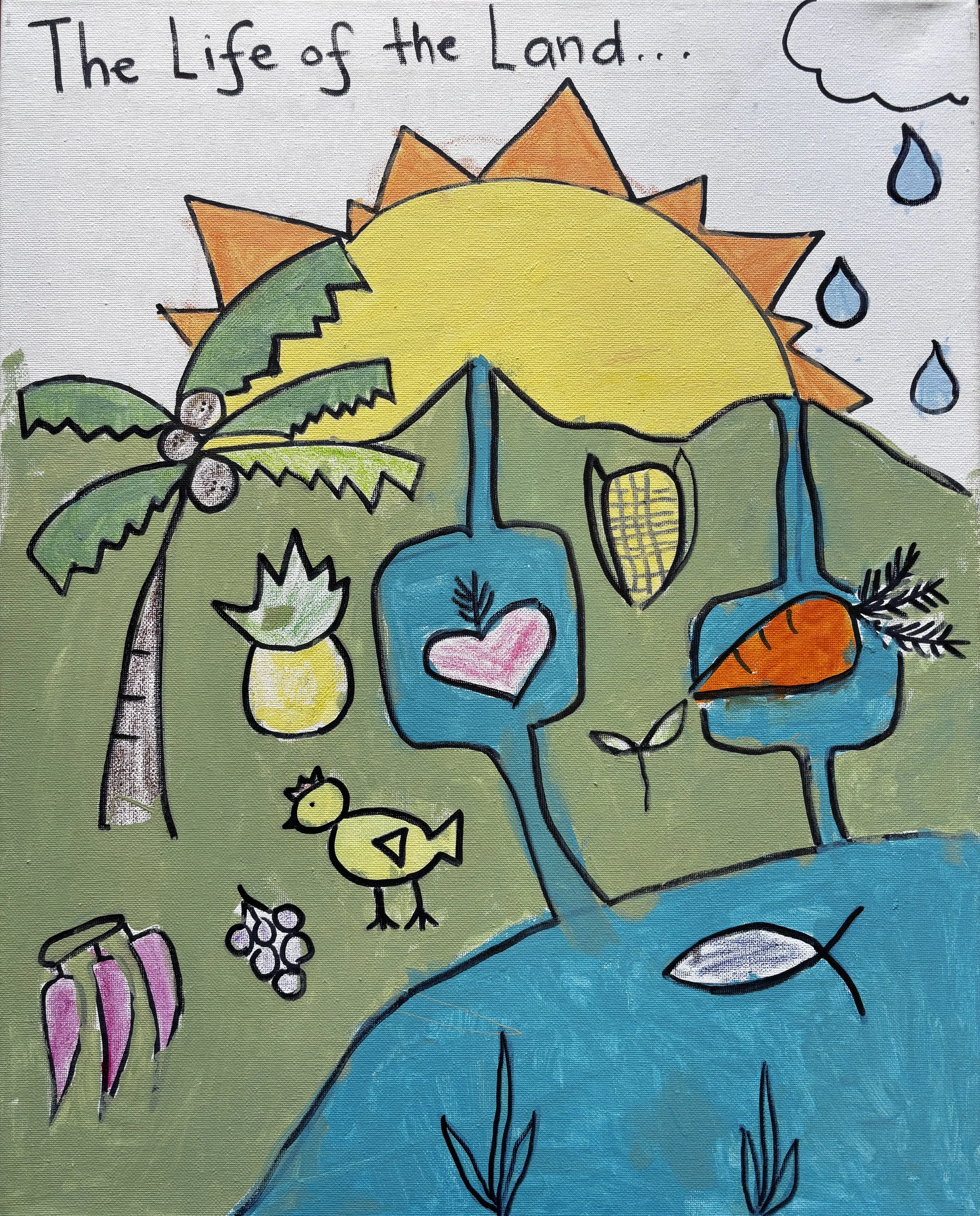
Name: Jing Han
Age: 10
School: Kapalama Elementary School
Youth Voice Award: This award recognizes a compelling artistic vision or narrative expressed by a young artist age 14 or younger.
ʻŌlelo noʻeau: The life of the land is perpetuated in righteousness. The land, water, ocean & mountains sustain us. Ua mau ke ea o ka aina i ka pono. Mālama ka ʻāina, ka wai, ka moana a me nā mauna iā mākou.
Artist Statement: Farm food has so much nutrition because the mountains & rain produce it in the land. At school, sometimes we have fruits and vegetables such as tomatoes, strawberries, lettuce, grapes, pineapple & peaches. We also have french fries, noodles & fish. The school makes a tomato sauce with salt & green onion that I don't like because it's not in my culture to eat it. I wish they had dumplings, Chinese food and more fresh fruits & vegetables.
To encourage farm to school meals and to help with education about these systems, the schools should do a class about it or try to do more school gardens. This way, our students can have more nutritional options to sustain a healthy lifestyle.
The Life of the Land

Name: Rhaidyn-Brooke
Age: 16
School: Waiʻanae High School
Best Representation of an ʻŌlelo Noʻeau: This award is given to the submission that most effectively illustrates the meaning and message of a chosen ʻōlelo noʻeau, as described by the artist in their written statement.
ʻŌlelo noʻeau: Holo iʻa ka papa, kau ʻia e ka manu. English Translation: When the shoals are full of fish, the birds gather over them. Interpretation: Where there is food, people will gather.
Artist Statement: I created this piece in response to the saying, “Holo iʻa ka papa, kau ʻia e ka manu” which reminds me that something as simple as food can bring people together. I believe this saying still matters today because most people struggle with coming together. This saying can bring more life and helpfulness to this act. I connect with this saying because every weekend me and my family plan a potluck to gather and connect more with each other. I wanted to show the same message as the proverb, so I included birds hunting for their fish food and humans coming together hunting for their fish food. I feel this brings the same message of both the saying and interpretation by adding both humans and birds. I hope my piece reminds people that it could be as simple as bringing food to connect and be with people. It shows how easy and culturable our land could help us come together. I want people to feel a deep connection to coming together with daily food because it is important to know that we can all come together and connect through survival and living.
Connection
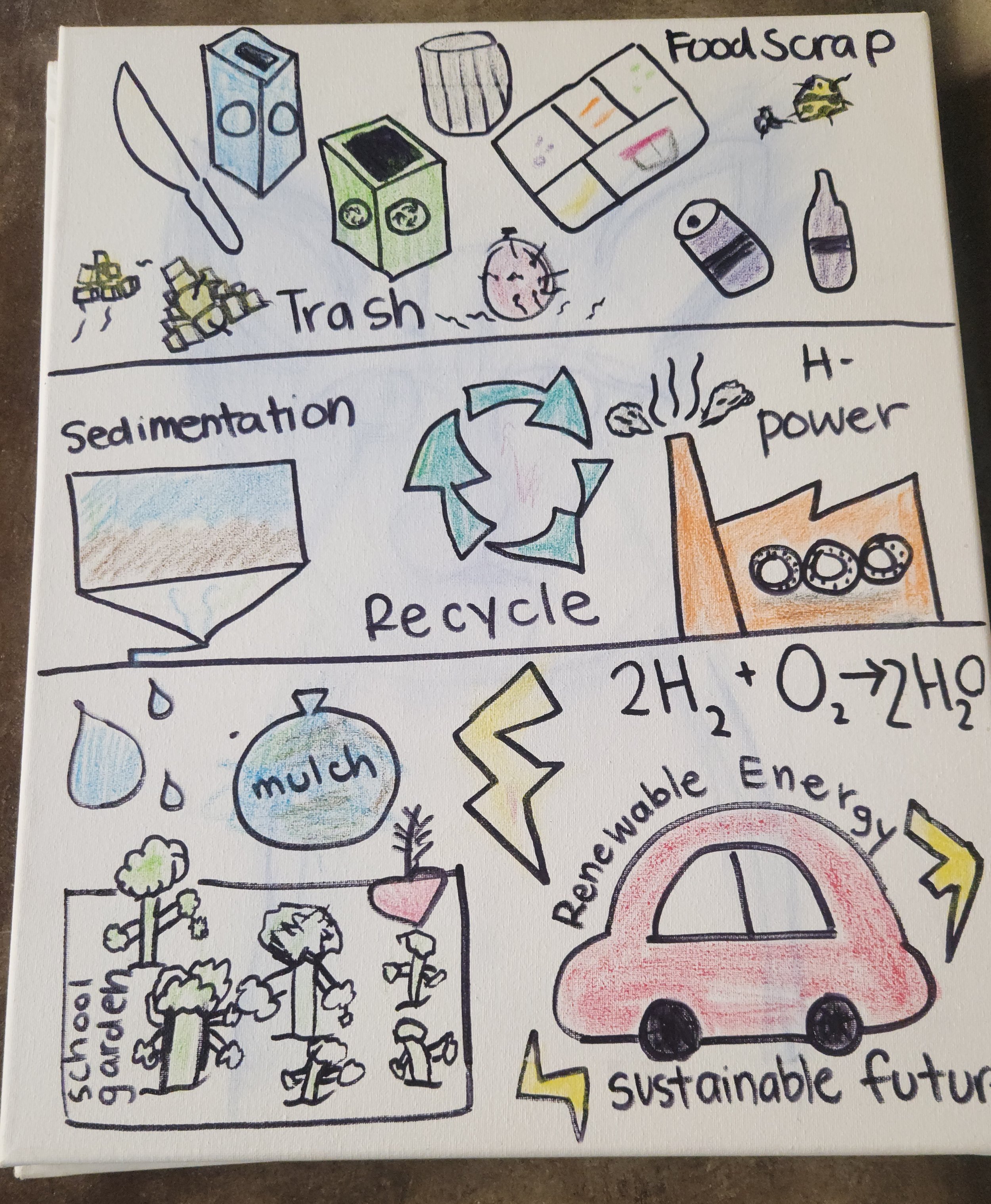
Name: Samuel Iou
School: Honowai Elementary School
Age: 9
ʻŌlelo noʻeau: Sustainability is our generation's responsibility. collaboration will create a sustainable system to work with the land and develop the future. ʻO ka hoʻomau ke kuleana o ko kākou hanauna. ʻO ka hui pū ʻana e hana i kahi ʻōnaehana hoʻomau e hana pū me ka ʻāina a hoʻomohala i ka wā e hiki mai ana.
Artist Statement: The food system is essential in life. The life of the land is perpetuated by education, action & care for our students & community with a sense of responsibility.
After the farm food is processed it will go to chosen schools and the chosen students will eat all the food and have leftovers. The leftovers get thrown away. The food scraps become compost for school gardens. Trash can be converted Into electricity. The electrical power can fuel cars. Sewer water becomes purified for reuse to grow plants.
For school gardens, kids can plant and have more energy from nutritious foods to learn and become like farmers to grow more food. This will help the kids have a creative mindset.
Through charity I can get more food to schools.
People can donate to food banks. Together we can help farmers and educate the community. These are the essential things in life.
A Sustainable System for a Sustainable Future
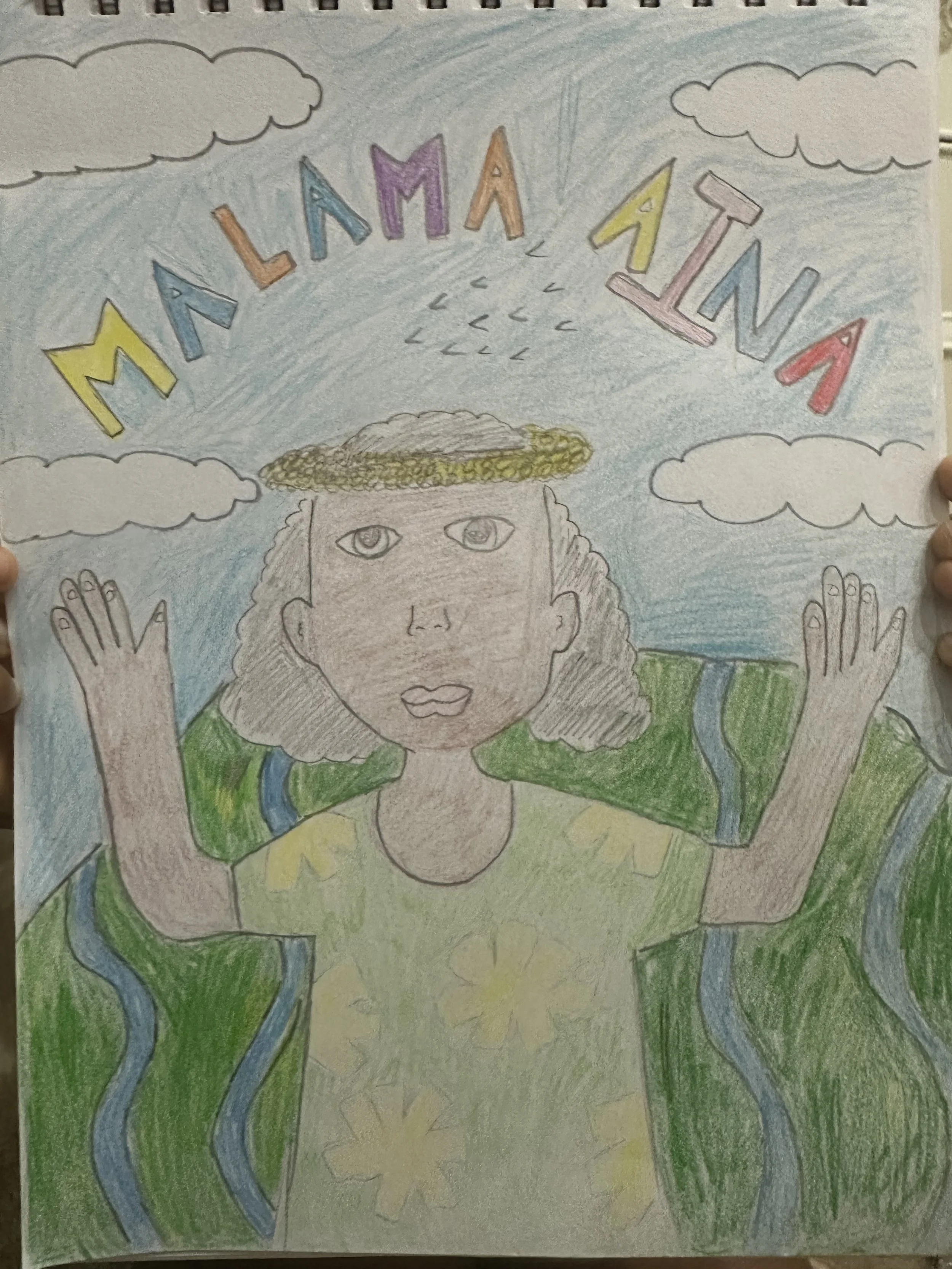
Name: Sahara Nutter
Age: 10
ʻŌlelo noʻeau: He aliʻi ka ʻāina; He kauā ke kanaka. English Translation: The land is chief; People are its servant.
Artist Statement: My artwork reflects, “He aliʻi ka ʻāina; He kauā ke kanaka” because my subject is surrendering to the land. She is ready to do the work. To be a servant.
Surrendering to the Land
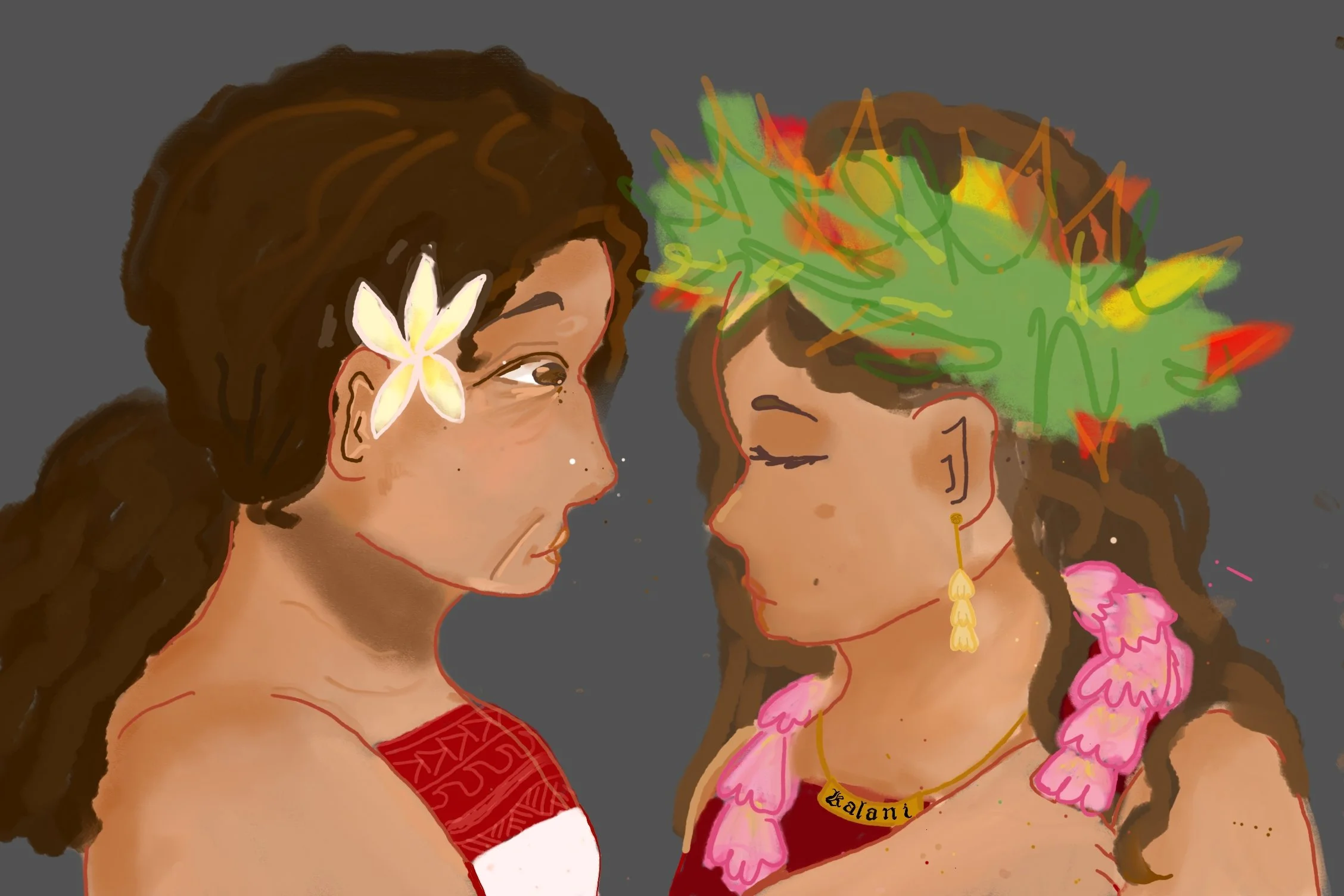
Name: Sophia Tung
Age: 14
School: Hawaiʻi Baptist Academy
ʻŌlelo noʻeau: I ulu no ka lala i ke kumu. English Translation: The branches grow because of the trunk. Interpretation: Without our ancestors we would not be here.
Artist Statement: In my artwork I wanted to portray a girl receiving a lei from one of her ancestors. On the right side of the illustration, I drew a girl in the present day. On her neck she is wearing a pink plumeria lei. On the left her ancestor looks over her, placing the lei over the girl's neck. Although it is not possible to see your ancestors in the present age, I wanted to capture the feeling of respecting and acknowledging those who came before you. It's important for us living in the modern world to know what our family members before us had to do to give us the opportunity to be here today. Everyone's family is rooted in culture and possesses unique stories. Using my illustration, I hope to encourage people to respect their ancestors and always be curious about their family history.
Makana (Gift)
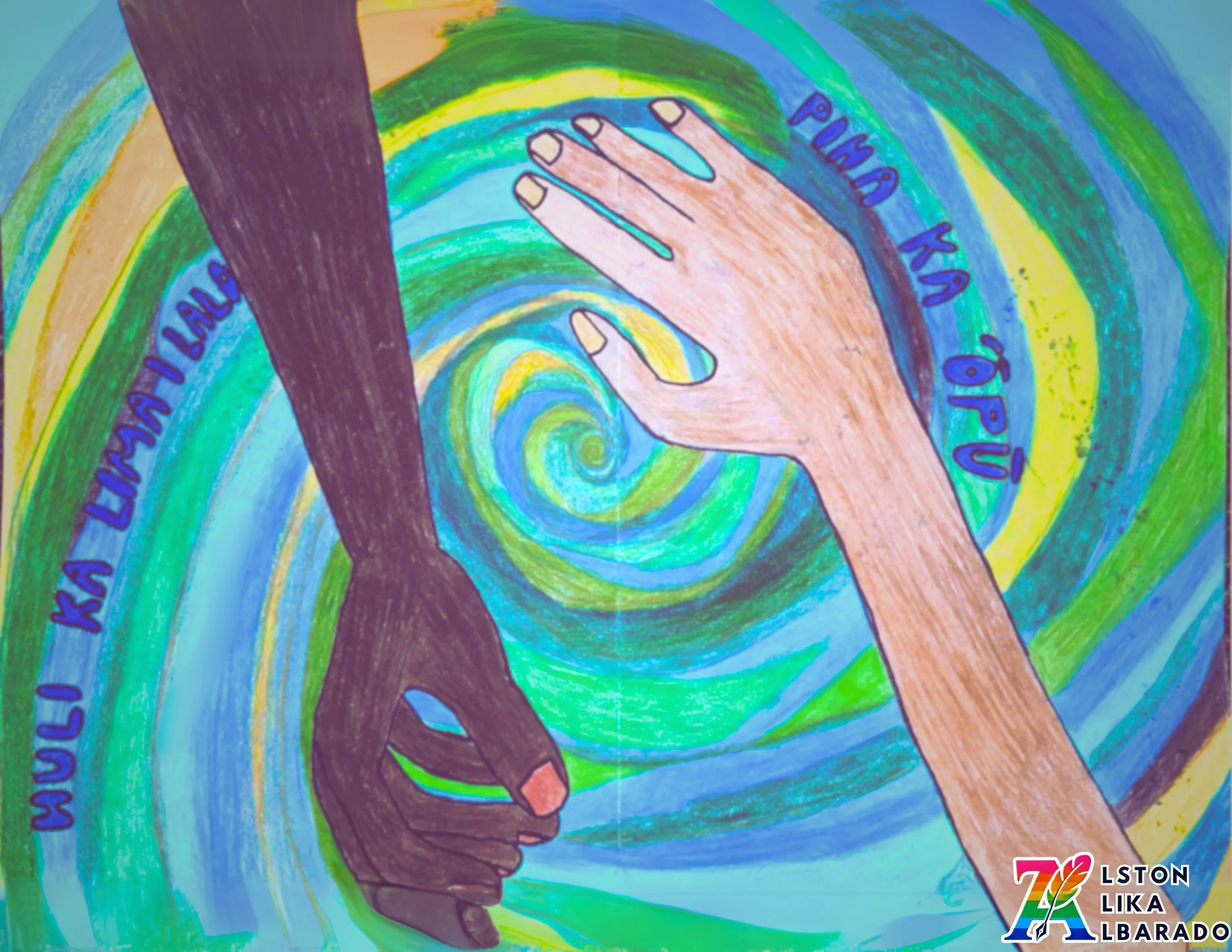
Name: Alston Albarado
School: Jefferson Elementary School
ʻŌlelo noʻeau: Huli ka lima i lalo, piha ka ʻōpū. English Translation: When the hands are turned down, the stomach is full.
Artist Statement: In the heart of the spiral, two hands reach out, bridging cultures and time. One hand, dark as fertile earth, the other, light as sunlit sand, they intertwine in unity. This embodies a call to turn hands down, work diligently, and fill the belly with the fruits of labor. The spiral, ancient and eternal, symbolizes life's cyclical nature and interconnectedness. It draws us inward, where shared humanity resides. Here, hands meet, transcending boundaries, weaving resilience and hope. The artwork reflects the ʻōlelo noʻeau, emphasizing the importance of labor and sustenance. It speaks to turning hands to the earth, ensuring all are fed. The hands, though different, unite in caring for the land, sowing sustainability, and harvesting equity. The spiral and hands promise a sustainable, prosperous, and resilient future for all.
Pōʻai
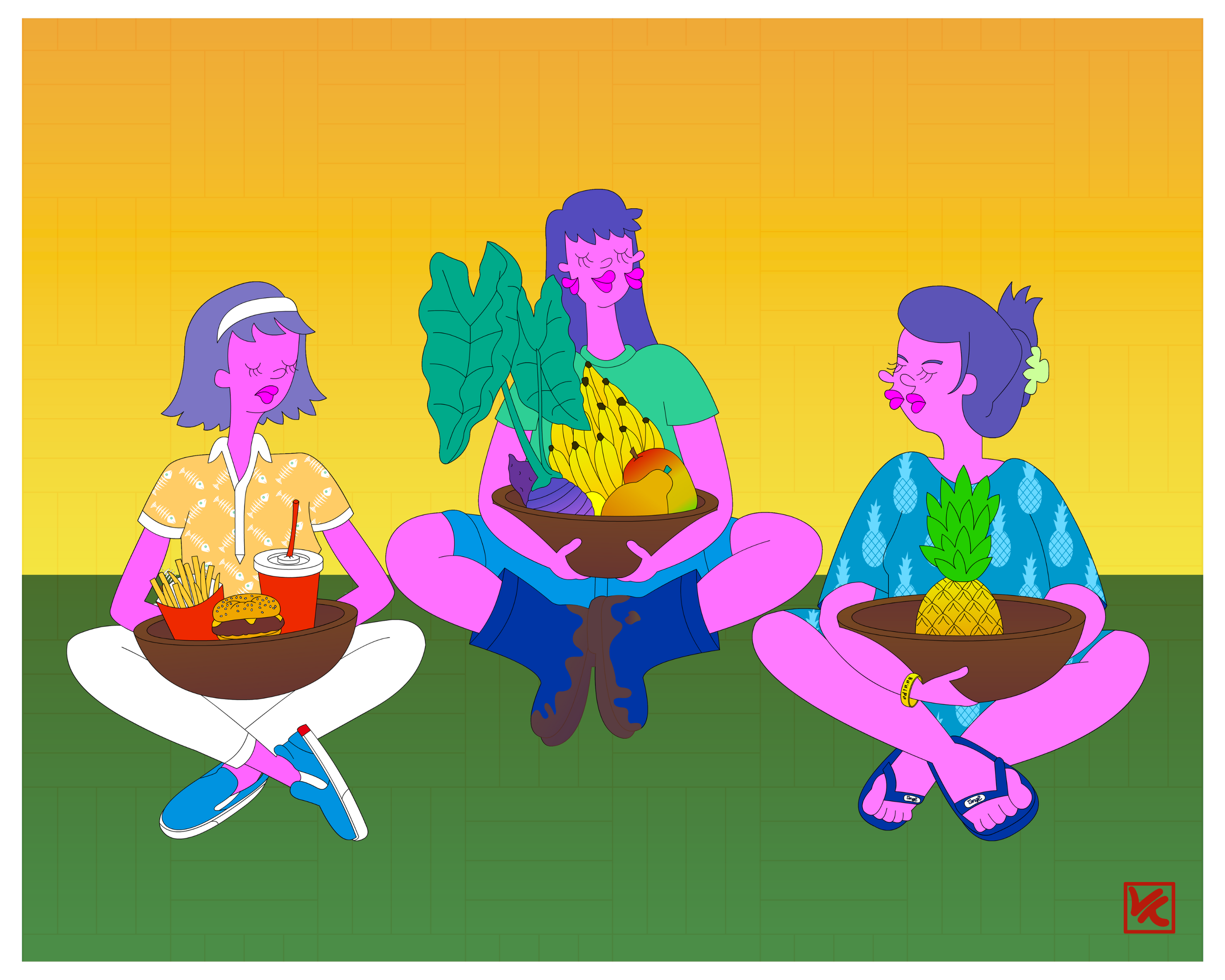
Name: Landan Laʻakea "Tanglman" Tolentino
Title: Three Bowls
Age: 32
ʻŌlelo noʻeau: E kanu meaʻai o nānā keiki i ka haʻi. English Translation: Plant edible food plants lest your children look with longing at someone else's.
Artist Statement: My piece, "Three Bowls," is inspired by the ʻōlelo noʻeau, "E kanu meaʻai o nānā keiki i ka haʻi," which literally translates to "Plant edible food plants lest your children look with longing at someone else's." The digital print depicts 3 mothers, each with a kalabash bowl containing various contents. One mother rests her bowl, containing fast food, lazily on her lap (representing an unwillingness to invest in our land's sustainability). The second mother holds tightly/greedily to her bowl containing a single pineapple (representing unsustainable actions/greed). Both mothers look enviously onto the third mother, warmly and openly offering her kalabash full of indigenous sustenance to the viewer and other mothers. The lauhala pattern subtly lining the background implies the necessity of communal investment into our people and land's future.
Three Bowls
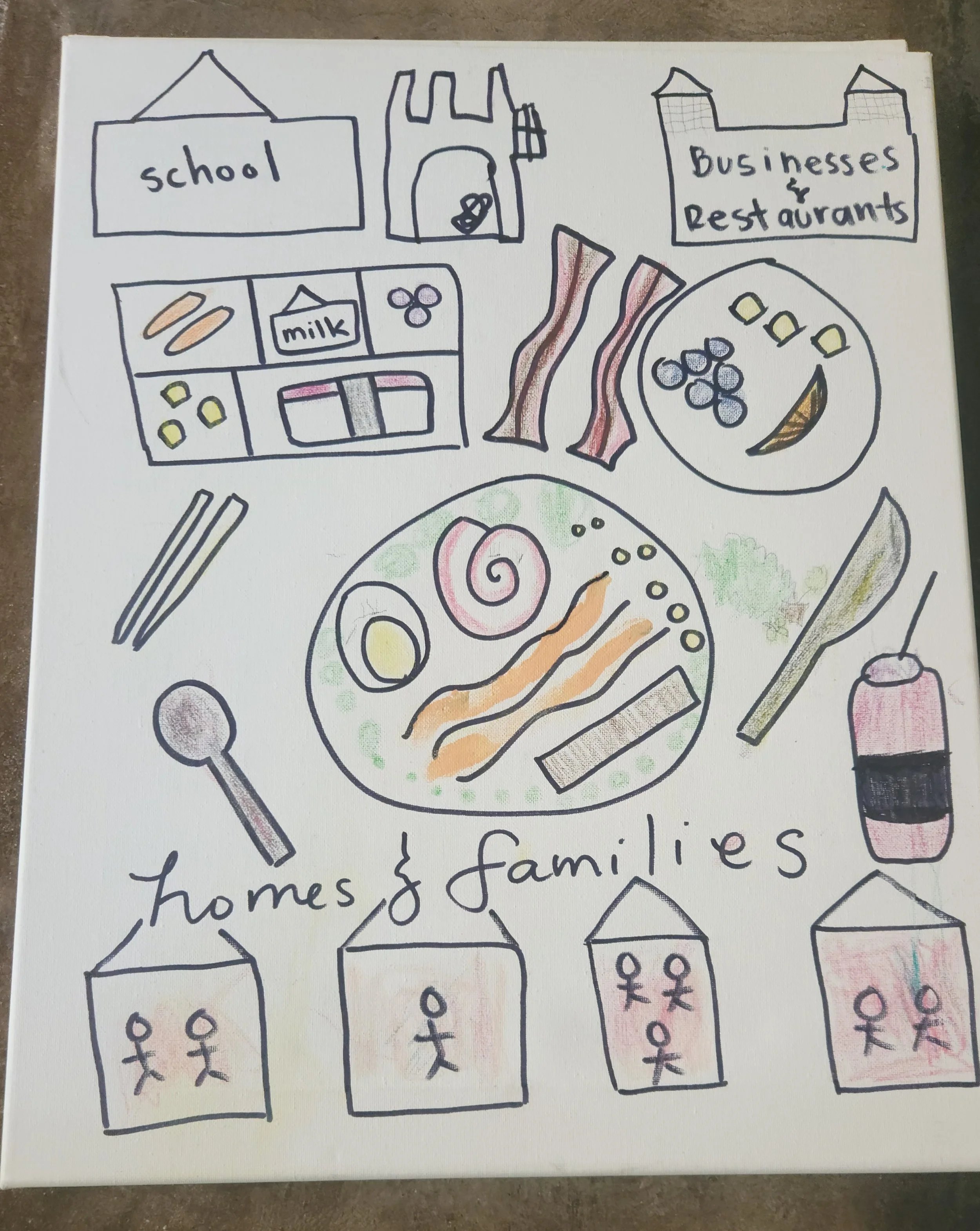
Name: Tian Yi
School: Maemae Elementary School
Age: 9
ʻŌlelo noʻeau: Nutrition is important to feed our children, families & society. He mea nui ka meaʻai e hānai i kā mākou mau keiki, ʻohana a me ke kaiāulu.
Artist Statement: My mom makes cake with fruits…she has mango cake, strawberry cake & dragon fruit cake. I wish our school could invent a class like a strawberry cake class because it will have fresh fruit for nutrition. Nutrition is very important for kids to grow up healthy.
Vegetables & fruits have so much nutrition and can help with vitamins, protein & energy for students. Our schools should work with farms to help get nutritious foods from farm to school. This will create a sustainable food system in our society.
Nutrition For our Students & Community