


Understand the Risk
Is heat a concern for Oʻahu?
Yes. The average number of hot and humid days has more than doubled in the past 10 years, due to climate change, and is still increasing. Oʻahu residents may have already noticed it's more difficult to get around, harder to focus in school, a larger problem to not have air conditioning, and less pleasant to be outside.

Everyone is vulnerable to heat and health risks, but some groups are more vulnerable in than others.
Heat and humidity can cause heat-related illness when the body gets too hot and can’t properly cool down. Heat-related illness can become serious quickly if ignored. Be prepared by learning how to respond to the signs.
Who is at risk?


Temperatures in Honolulu have already increased by 2.6°F since 1950. This rise means we are already experiencing more days with temperatures that can pose a risk to vulnerable populations and increase heat-related illnesses.
Is it getting hotter?

What is the heat index?
The heat index is what the temperature feels like to the human body when humidity is combined with the air temperature. High humidity hinders the body's natural cooling process of sweating, making moderate temperatures feel much hotter. The heat index has reached over 100°F on Oʻahu, as shown on the left.


How hot will it get?
By 2100, O‘ahu is projected to experience temperatures that are between 1.8-7.2°F warmer. A change in temperature of even a few degrees can impact human health, energy usage, and the environment.


Cooling our Island
Urban areas of O’ahu, like the area around Ala Moana, are hotter due to the Urban Heat Island Effect, a phenomenon where cities experience higher temperatures than surrounding rural areas because dark, impermeable materials like concrete and asphalt trap heat. Cooling strategies include planting trees, removing pavement, creating green roofs, and using reflective surfaces like cool paving and roofs.
What is the Urban Heat Island Effect?


Urban Heat Island Effect
Hot Spots & Cool Fixes: Explore Oʻahu's heat patterns and cooling solutions in our interactive StoryMap!
The Urban Heat Island Effect is shown clearly in Kailua, with temperatures increasing near developed areas.

What is the City and County of Honolulu’s responsibility related to heat?
-
Action 1.1 Develop and distribute materials about climate hazards, their impacts, and how individuals can take action to prepare.
-
Action 12.1 Update the City’s street and park tree inventory to better maintain and grow the urban tree canopy.
Action 12.2 Facilitate cooling solutions and retrofits to protect residents from increasing temperatures.
Action 12.3 Establish shade quotas along multi-modal transit corridors, in public recreation spaces, and in other public facilities.
Action 12.4 Develop a “Heat Hazard Annex” for the Emergency Operations Plan.
Action 12.5 Assess risk to community health and safety from increasing temperatures and heat waves.
Action 12.6 Increase availability of public drinking fountains.
Action 12.7 Maximize installation of solar PV over parking lots to mitigate urban heat.
-
Action 32 Deploy Sustainable Roof Systems to Manage Urban Heat and Rainfall
Action 33 Keep O‘ahu Cool by Maintaining and Enhancing the Community Forest

Outreach Materials
These outreach materials are free for you to use and distribute. You'll find download links in various languages at the bottom of this page.
-
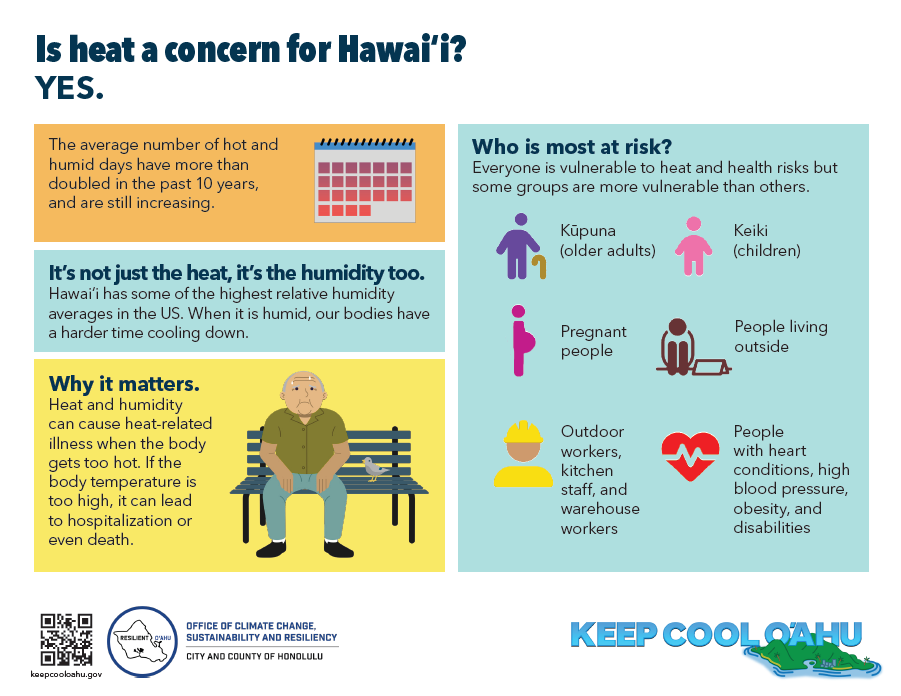
Is Heat a Concern?
-

General Heat Brochure
-

Cooling Your Home
-
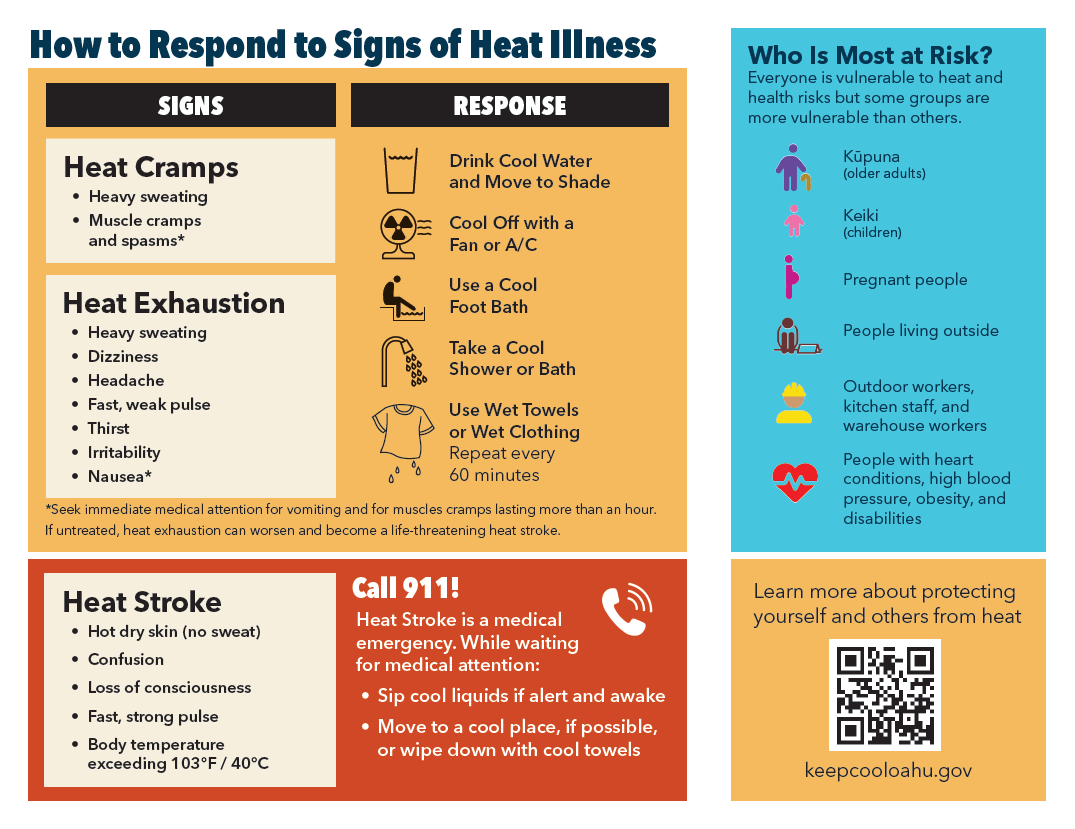
How to Respond to Signs
-

Pregnancy + Heat
-
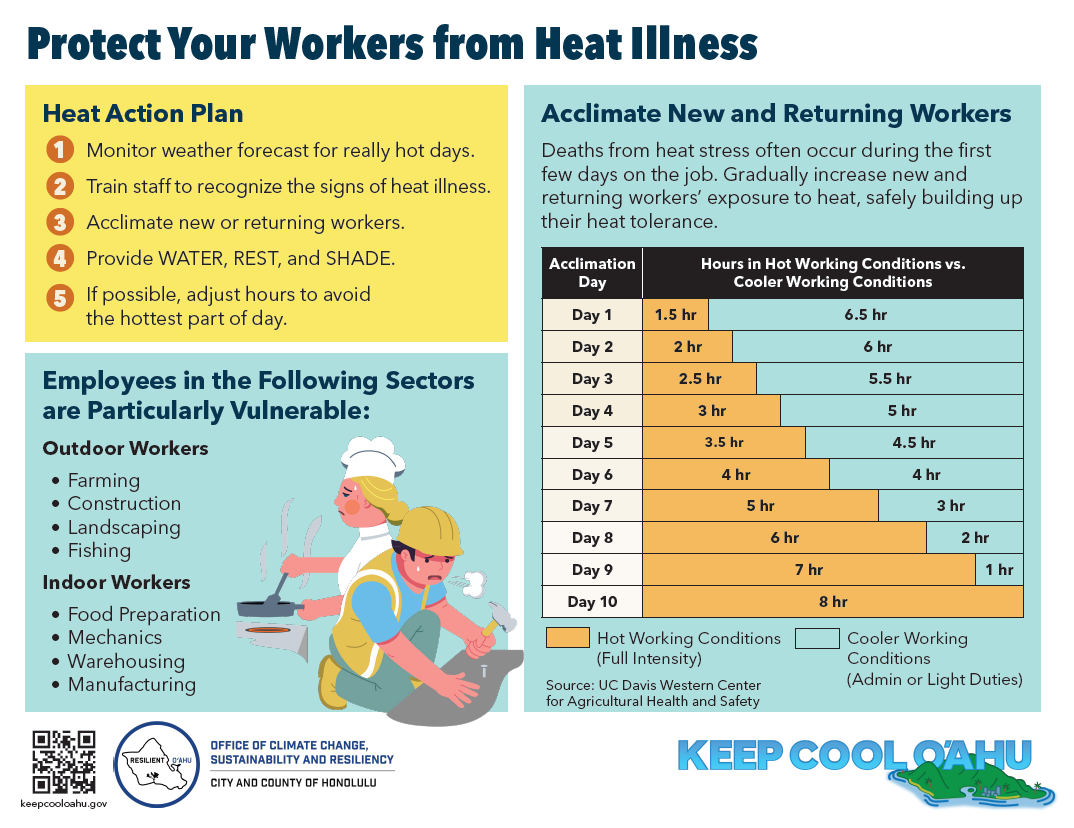
Workers + Heat
-

Shishi Chart
-

Kūpuna Brochure
-
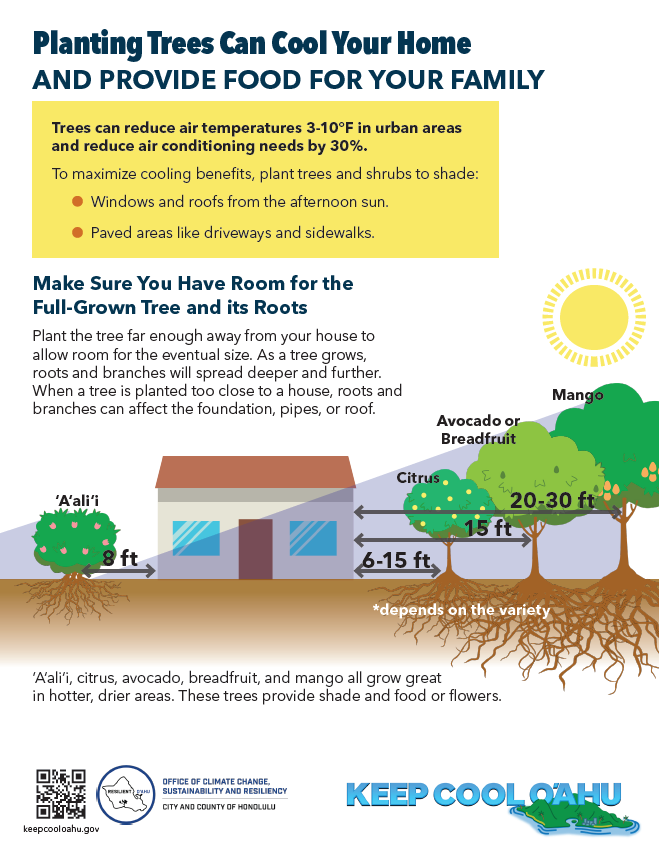
Planting Trees
Download Materials
For hard copies, please don't hesitate to contact us at madeline.mckenna@honolulu.gov.
Learn how to stay safe in hot weather by watching our short videos on:
Recognizing heat illness
Tips for staying cool
How to help others stay safe
The videos are available in seven languages: Chuukese, English, Ilocano, Marshallese, Spanish, Tagalog, and Tongan.
Heat Safety Videos
Additional Resources
Frequently Asked Questions
-
Keep Cool Oʻahu is an outreach campaign developed by the Resilience Office to encourage residents of Oʻahu to prepare for the increasing risk of high temperatures. This campaign includes free, downloadable outreach materials for organizations and individuals to share.
-
2019 remains the hottest year for the island of Oʻahu. The highest Heat Index (feels like temperature) recorded was 107.3° on August 31, 2019 in Waimalu.
-
Even if 2024 wasn't the hottest year here, there is a clear trend of temperatures increasing on Oʻahu over time. Temperatures are influenced by complex regional weather patterns and ocean conditions, and scientists do not expect each year to break temperature records. So, while year-to-year temperatures vary due to local weather conditions, the trend over a long period of time shows a clear increase in heat.
-
The City and County of Honolulu does not currently operate cooling centers. However, you may consider visiting public spaces with Air Conditioning, such as libraries, malls, TheBus, or a friend’s house.