

2020-2025 Climate Action Plan
2020-2025
Climate Action Plan
The Climate Action Plan is a science-based, community-driven strategy for Oʻahu to combat climate change and eliminate fossil fuel emissions—the root cause of climate change. The 2020-2025 Plan was the first of its kind for Oʻahu. It laid out a detailed list of programs, policies, and actions for our island to take, alongside state and federal actions, to reduce greenhouse gas (GHG) emissions by 45 percent from 2020-2025 and put us on the path to carbon neutrality by 2045.
An update to the plan is required every five years by the City’s Climate Action Policy outlined in Ordinance 20-47 and is a requirement to remain in the Paris Climate Agreement. In October 2026, the 2025-2030 Climate Action Plan update was adopted by the Honolulu City Council, making it the current GHG emissions reduction plan for the City.
This page is an archive of the City’s original Climate Action Plan, allowing a look-back at the first five years of dedicated City action to reduce the impacts of climate change.

Climate Action at a Glance
The 2020-2025 Climate Action Plan outlined 9 strategies and 47 actions for O‘ahu to pursue over five years from the transportation, electricity, and waste sectors.

Learn More
Transportation
When this plan was released in 2020, ground transportation—our cars, trucks, motorcycles, buses, and other heavy-duty vehicles—accounted for 19% of O‘ahu’s GHG emissions, a trend that has remained flat over the last decade. Enabling safer, more affordable, and efficient transportation options for residents to take transit, bike, walk, or carpool can both reduce emissions and improve overall quality of life on O‘ahu.

Learn More
Electricity
When this plan was released in 2020, powering O‘ahu’s homes, businesses, industries, and electric vehicles created about 35% of O‘ahu’s GHG emissions. Approximately 80% of O‘ahu’s electricity generation currently came from fossil fuels. Strategies to expand energy efficiency and renewable energy infrastructure can help the City drive continued investment and innovation in decarbonizing the electricity sector.

Learn More
Waste
When this plan was released in 2020, emissions from waste and wastewater disposal and management were about 3% of O‘ahu’s GHG emissions. Landfills and fossil-fuel based plastic goods create a significant carbon footprint. Strategies that focus on both waste prevention and maximizing the efficiency of the waste we cannot avoid can help to reduce emissions locally while also having a notable impact on emissions elsewhere.

Examples of Action

TheBus is Driving to a Clean Energy Future
The City now has 17 electric buses in its fleet, initializing the transition to electrify the City’s heavy-duty vehicle fleet and expand electric vehicle charging infrastructure island-wide.

Energy Savings Performance Contracts (ESPC)
The City has two ESPCs to help accelerate efforts to implement energy conservation and renewable energy opportunities at City facilities, while saving taxpayer dollars and boosting clean energy jobs.

Protected Bike Lanes
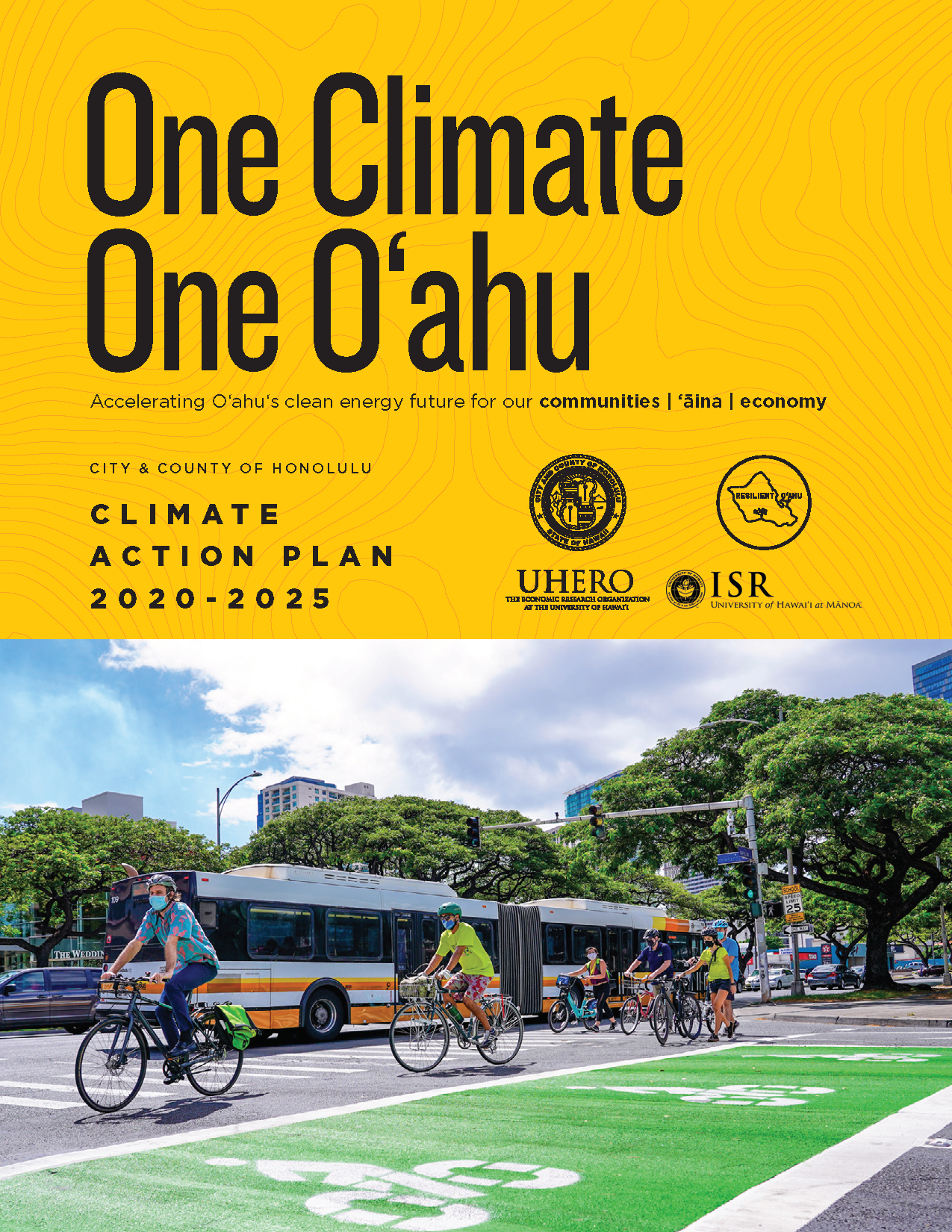
As a part of the Honolulu Complete Streets program, the City has added additional protected bike lanes—such as Ward Avenue from Ala Moana Boulevard to South King Street—providing an important connection within the growing Kakaʻako neighborhood and improving both bicyclist and pedestrian safety.

Built on
Community Voices

The 2020-2025 Climate Action Plan was built on a foundation of community voices. More than 2,000 perspectives were shared in workshops, community meetings, surveys, focus groups, and virtual open houses with the community, building on robust technical analysis from sector experts and the University of Hawai‘i and consultation with City departments.
The City released a draft plan for public comment in December 2020 and reviewed community’s input for incorporation into the final plan. Following the public comment period, the Resilience Office held a virtual community meeting to present the draft plan and address comments and questions from the public.
